
Elegant Plus Size Formalwear: 6 Silhouettes for Prom, Weddings & Galas
Elegant Plus Size Formalwear: 6 Silhouettes for Prom, Weddings & Galas

The most reliable path to an elegant plus-size formal look starts with choosing a silhouette that flatters your largest measurement, then supporting it with the right fabric and construction, and finishing with proper alterations and intentional accessories. Our catalog is organized to help you understand the silhouettes, fit rules, fabric choices, alteration timelines, and styling touches that pull a formal outfit together.
TL;DR:
- Fit and flare dresses need accurate bust and waist measurements, while mermaid styles depend on high hip and thigh fit for comfortable movement.
- Choose the size that fits your largest measurement, then tailor smaller areas; sit and walk during fittings to catch binding or restricted movement.
- Most formal dresses can be taken in by up to two sizes, but rigid fabrics and heavy beading limit comfort or later alterations.
- Book a tailor soon after purchase, and attend the final fitting a few weeks before the event wearing your planned shoes and undergarments.
Table of Contents
- 1. Best Elegant Silhouettes for Plus-Size Formal Events
- 2. How to Measure Yourself for a Formal Dress That Actually Fits
- 3. Fabric, Construction, and Length Rules for Every Occasion
- 4. Alterations and Fittings: What’s Possible and What Isn’t
- 5. Styling and Accessories That Finish the Look
- 6. Our Approach to Fit at Dress Me Up NY
- Why Most Plus-Size Formal Advice Gets the Order Wrong
- Start Browsing Formalwear Built for Your Event
- FAQ
- Sources
1. Best Elegant Silhouettes for Plus-Size Formal Events
Not every gown style works equally well for every event or every body, so narrowing your choices early saves time and reduces returns. We recommend picking one or two silhouettes from this list based on where you’re headed and which part of your figure you want to highlight.
A-line and fit-and-flare dresses are the most versatile picks for wedding guests and cocktail parties. The fitted bodice and flared skirt flatter a wide range of shapes, and because the skirt skims rather than clings, the main fit priority is getting the bust and waist right. Look for a lined bodice with built-in cups for support without added bulk.
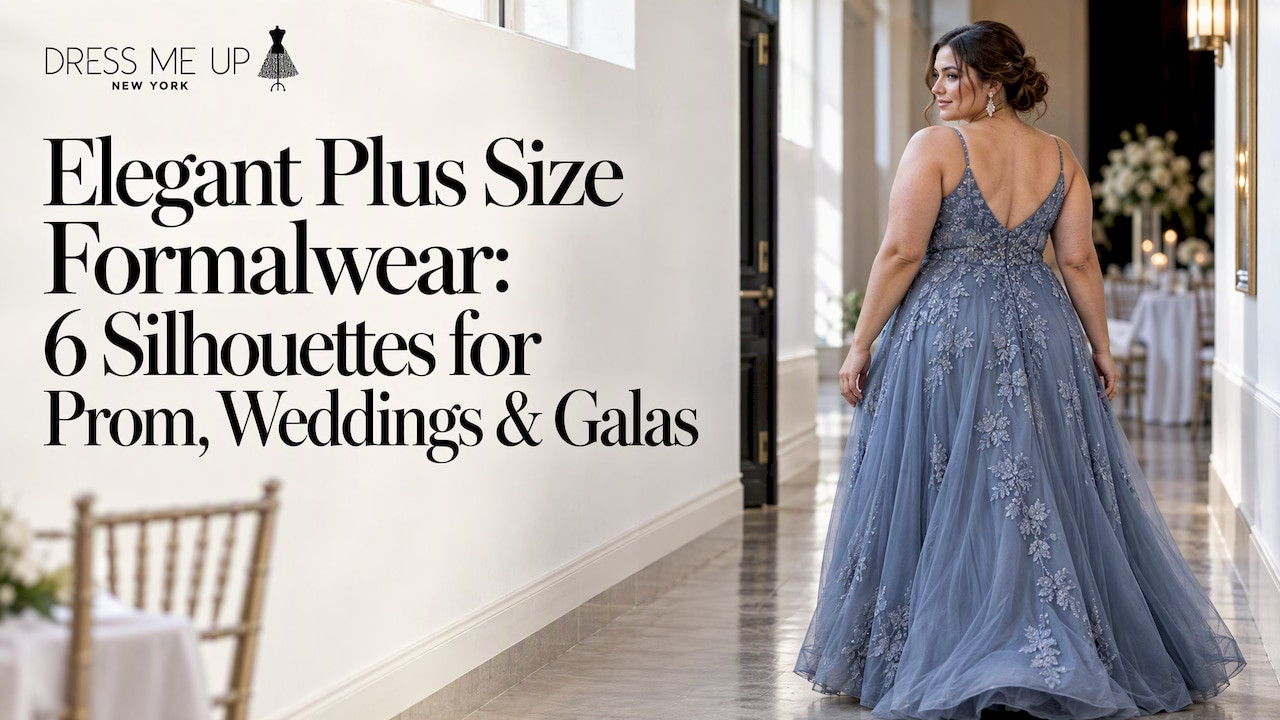
Ball gowns bring the drama that prom and black-tie events call for. The full skirt hides a multitude of fit variables below the waist, so your attention should go to the bust and waist seam, and you’ll want to allow room for structured petticoats or layered tulle underneath.

Mermaid and trumpet gowns deliver a sleek, red-carpet silhouette, but they’re the least forgiving style on this list. Because the fabric hugs the body through the hip and thigh before flaring at the knee, silhouettes recommended for plus-size formalwear include mermaid styles specifically when the high hip and thigh measurements are prioritized, and it often helps to size up if you fall between two sizes.
Column and sheath dresses offer a modern, minimal option for gala nights or black-tie events where you want clean lines instead of volume. Fit priority here shifts to the full hip and the hem opening, since a narrow hem can restrict your stride more than any other part of the dress.
Wide-leg jumpsuits and tailored pantsuits have become a legitimate alternative to gowns for many formal occasions. Jumpsuits cut in luxe fabrics read as wedding-appropriate or even black-tie when properly tailored and paired with heels and statement jewelry. Prioritize the waist and hip fit, and consider a cropped jacket to balance proportions.
Separates, meaning a dressy top paired with a formal skirt, give you flexibility to mix fabrics and sizes across your top and bottom half. This option works particularly well if your upper and lower body wear different sizes, since you can fit each piece independently.
- A-line and fit-and-flare: best for wedding guests and cocktail events, fit priority is bust and waist.
- Ball gown: best for prom and black tie, fit priority is bust and waist with room for skirt volume.
- Mermaid or trumpet: best for prom and red carpet, fit priority is high hip and thigh.
- Column or sheath: best for black tie and galas, fit priority is full hip and hem opening.
- Wide-leg jumpsuit: best as a gown alternative for most formal events, fit priority is waist and hip.
- Separates: best for mixing sizes and fabrics across top and bottom.
2. How to Measure Yourself for a Formal Dress That Actually Fits
Getting an elegant look starts long before you pick a color or a neckline. It starts with a tape measure. Taking accurate measurements before you shop is the single biggest factor in whether a formal dress fits the way it looks in photos.
You’ll need a soft measuring tape, a mirror, and ideally a friend to help you measure around your back without the tape twisting.
- Measure your high bust, wrapping the tape just under your arms and across your shoulder blades.
- Measure your full bust at the fullest point, keeping the tape level front and back.
- Measure your natural waist, which is usually the narrowest point above your belly button.
- Measure your high hip, about three inches below your waist, since this is where fitted skirts and trousers often catch.
- Measure your full hip at the widest point, typically seven to nine inches below the waist.
- Measure hollow-to-hem from the small dip at the base of your throat down to where you want the hem to fall, which matters most for floor-length gowns.
The core rule that governs every formal purchase: choose the size that fits your largest measurement and have the smaller areas tailored afterward. This prevents the seam stress and pulling that happen when a dress is sized to your smallest measurement and then forced to stretch everywhere else.
Different silhouettes shift which measurement matters most. A strapless gown lives or dies by your high bust measurement, since that’s what keeps the top from sliding down. A mermaid gown depends on your high hip and thigh circumference, because that’s the tightest point of the garment. A column or sheath dress depends on your full hip and the width of the hem opening, since a narrow hem can trap your stride.
Pro Tip: At any fitting, sit down in the dress and walk around the room before deciding it fits. A dress that looks perfect standing still can bind at the waist when you sit or restrict your steps when you walk.
For a deeper walkthrough of these measurements with size charts, our fit and style guide for plus-size formalwear breaks down each step with visuals, and our post on measuring bust, waist, and hips walks through the same priorities by silhouette.
3. Fabric, Construction, and Length Rules for Every Occasion
The fabric you choose affects comfort just as much as it affects how elegant the finished look reads, and it also determines how much room you have for alterations later.
Rigid fabrics like satin, taffeta, and velvet hold their shape beautifully, but they require sizing for comfort rather than sizing down for a snug fit, since they don’t give at all. Stretch fabrics like crepe or ponte knit allow a closer fit through the body, but you should still test seated comfort before committing, since what feels fine standing can feel tight after an hour at dinner.
On construction, a few details make a real difference in how a formal dress wears through a long event:
- Full lining prevents static cling and adds a layer of structure to thinner fabrics.
- Power mesh panels smooth the midsection without the bulk of separate shapewear.
- Built-in cups remove the need for a bra, which matters for backless or strapless necklines.
- Boning through the bodice keeps structured gowns from shifting during dancing or dining.
Heavy beading and embellishment affect more than just the look. They also limit how much a dress can later be taken in or let out, since altering a beaded seam means removing and reapplying the embellishment by hand. Rigid fabrics and heavy beading reduce alteration flexibility, so if you expect to need significant tailoring, a simpler fabric gives your tailor more room to work.
Length should match both the event and your shoes. Floor-length gowns for black-tie events or galas should be measured hollow-to-hem with the actual shoes you plan to wear, since even a one-inch heel difference changes where the hem lands. Midi lengths, generally falling between the knee and ankle, work well for cocktail parties and many wedding-guest situations, while tea-length and knee-length options suit prom or daytime formal events. Fabric and length decisions should map to the event and season, with breathable fabrics for warm-weather weddings and heavier ponte or velvet for winter galas.
4. Alterations and Fittings: What’s Possible and What Isn’t
Even a well-chosen dress usually needs some tailoring, and knowing what’s realistic ahead of time saves both money and disappointment.
- Hemming is the easiest and most common alteration, typically completed in a single visit.
- Taking in the waist or bust is a medium-difficulty change that most tailors handle without issue.
- Adjusting shoulders or restructuring a bodice is difficult and not every tailor will take on this work.
- Altering sequins or heavy beading requires a specialist and usually costs more than a simple hem.
Realistically, most formal garments can be taken in by up to two sizes, while letting a dress out is far more limited and depends entirely on how much seam allowance the manufacturer left. A heavily beaded or structured gown leaves almost no room to let out at all, which is one more reason sizing for your largest measurement matters from the start.
Book your tailor as early as you can once you’ve purchased your dress, since a proper alteration schedule usually includes an initial consultation, a mid-point fitting for shaping, and a final fitting a few weeks before the event with your actual shoes and undergarments on hand.
Pro Tip: At your final fitting, sit down and climb a few stairs in the dress. If the waist digs in while seated or the hem catches on the stairs, ask for another half-inch of ease at the bust and hip before you sign off.
5. Styling and Accessories That Finish the Look
The right outfit only looks complete once the accessories and layers are working with it instead of against it.
- A tailored bolero, cropped jacket, or wrap adds warmth and formality, and should match the dress fabric rather than contrast sharply with it.
- Break in your shoes before the event, choose a block heel or wedge for stability, and bring a pair of flats for later in the night.
- Pick one statement piece, either earrings or a necklace, and let the other stay simple; match a pendant’s shape to your neckline so the lines work together instead of competing.
- Long pendant necklaces elongate the torso, which pairs especially well with column and sheath silhouettes.
- For shapewear, choose structured support for fitted silhouettes like mermaid and column styles, and lighter smoothing pieces for dresses with more natural ease, along with anti-chafe shorts for any dress with a slit or shorter hem.
6. Our Approach to Fit at Dress Me Up NY
We organize our catalog around the same event-first thinking covered in this guide, with categories for evening gowns, cocktail dresses, and wedding-guest styles so you can start from your occasion rather than scrolling endlessly. Our fit-focused posts, including our style and fit guide for plus-size formal dresses and our 2026 style and fit guide, walk through the same measurement and silhouette principles in more depth with real examples pulled from our collections.
Why Most Plus-Size Formal Advice Gets the Order Wrong
Most styling advice leads with color or trend, and we think that’s backward. The decisions that actually determine whether a formal outfit looks elegant, meaning silhouette fit and alteration planning, get treated as an afterthought, while the decisions that matter least, like which shade of blush is trending this season, get top billing.
The reader who skips the tape measure and goes straight to browsing photos is the one who ends up disappointed at pickup or on delivery day. A dress that fits your largest measurement and gets tailored down is always a better foundation than a dress chosen for its color and hoped into fitting. Prioritize the fit sequence first: measure, choose the silhouette suited to your event, confirm the fabric supports that silhouette, then schedule alterations early enough to fix the details. Everything else, including the jewelry and the shoes, is finishing work, not foundation.
— Dressmeup
Start Browsing Formalwear Built for Your Event
Once you know your measurements and your silhouette, the easiest next step is to browse by occasion instead of scrolling an entire catalog. Our evening dresses collection covers gowns for galas and formal parties, while our formal gowns category focuses on floor-length and black-tie options if that’s your event.
If you’re dressing for a wedding, our wedding guest and bridesmaid category is organized specifically for that occasion, and if your event calls for something shorter or more playful, our cocktail and party collection includes jumpsuits and mini dresses as well. For a simple layering piece to wear over any of these looks, a classic black dress or wrap from Athleta works well for a rehearsal dinner or a cooler evening. Browse by the event you’re actually dressing for, and let the fit guidance above narrow the rest.
FAQ
What silhouette is most flattering for plus-size body types?
There’s no single silhouette that flatters every plus-size figure, since the right choice depends on which measurement you want to prioritize. A-line and fit-and-flare styles work for the widest range of bodies and events, while column and mermaid silhouettes suit those who want a sleeker line through the hip and want to prioritize that fit point specifically.
How do I choose a dress size when shopping online for formalwear?
Choose the size that corresponds to your largest measurement, whether that’s your bust, waist, or hip, and plan to have the smaller areas tailored afterward. This approach, recommended in formal dress sizing guidance, avoids the pulling and seam stress that happen when a dress is sized too small anywhere on the body.
How many sizes can a formal dress realistically be altered?
Most formal garments can be taken in by up to about two sizes, but letting a dress out is far more limited and depends on the seam allowance left by the manufacturer. Heavily beaded or structured gowns have even less flexibility, which is why sizing for your largest measurement from the start matters more than hoping a tailor can take it in later.
When should I schedule alterations before a formal event?
Book your tailor as soon as possible after purchasing your dress so you have time for an initial consultation, a mid-point fitting for shaping, and a final fitting with your actual shoes a few weeks before the event. This schedule gives your tailor room to address fit issues without rushing specialist work like beading repair.
What fabrics work best for plus-size formal dresses?
Rigid fabrics like satin, taffeta, and velvet hold structure well but should be sized for comfort rather than sized down, since they don’t stretch. Stretch fabrics like crepe or ponte allow a closer fit, though it’s worth testing seated comfort, and fabric choice should also account for the season and event you’re dressing for.
Sources
- Evening & Formal Dresses Sizing & Fit Guide | Farnelli
- What to Wear to a Wedding: The Plus Size Guest Guide | Plus Size Fairy
Recommended
- Plus Size Gala Attire: Style and Fit Guide for 2026
- Plus Size Formal Dress Tips for Elegant Event Style
- Women’s Plus Formal Dresses: Style & Fit Guide 2026
- Plus Size Prom Dresses: Curvy-Friendly Picks You’ll Love